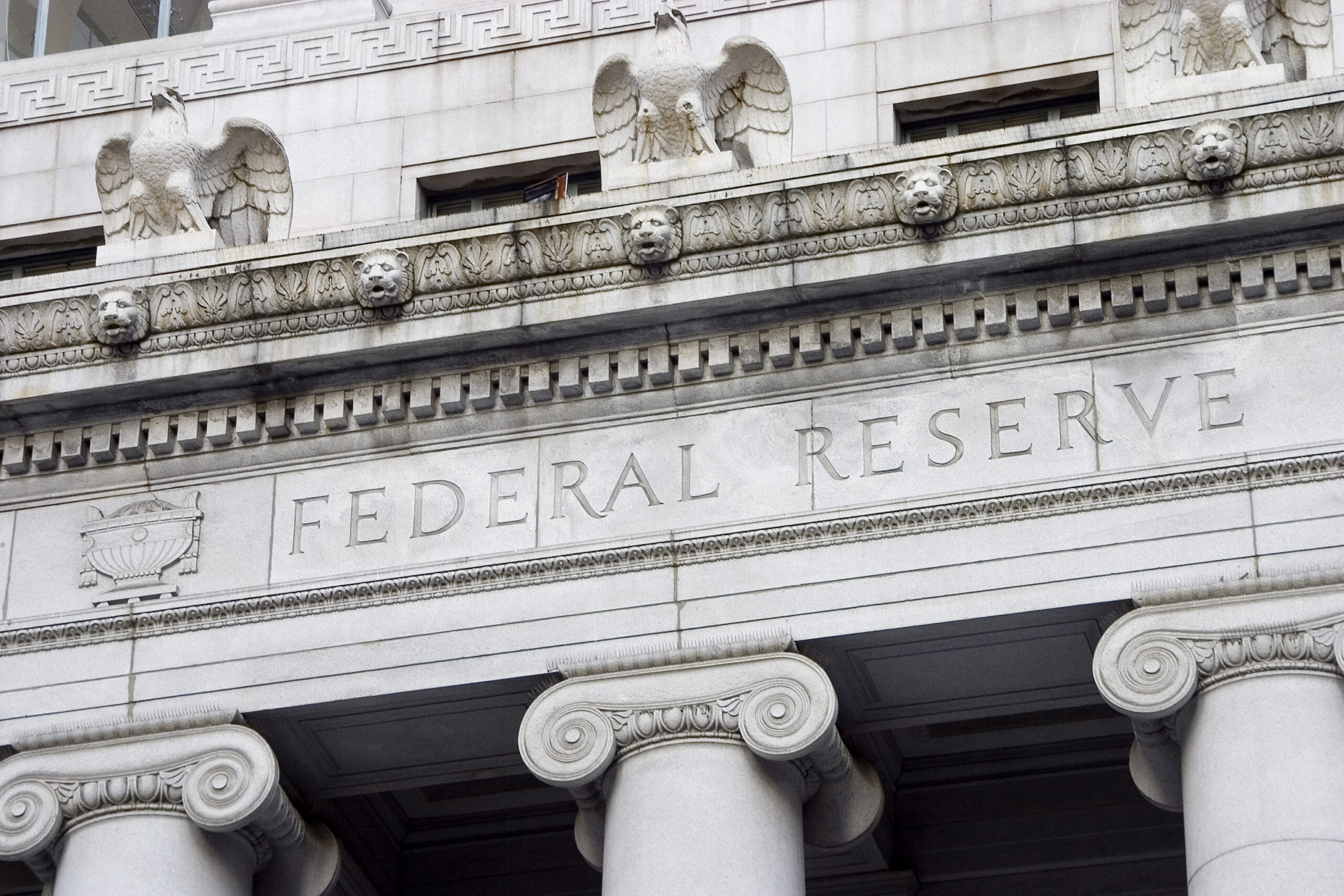
Should the Federal Reserve be independent?
Depending on how you count, the enumerated powers of the United States government in Article I Section 8 of our Constitution are about 20. And all of these powers are a single sentence with clauses separated by semicolons.
Two powers are: To coin Money, regulate the Value thereof, and of foreign Coin, and fix the Standard of Weights and Measures.
The founders intended it as a single power because there’s no semicolon. What follows the semicolon is this power: To provide for the Punishment of counterfeiting the Securities and current Coin of the United States.
Okay, so Congress alone has authority to create money and to define its value. And to protect the value of our money, Congress has power to punish counterfeiting – creating fake money.
What is fake money? One can deduce from Article I Section 8 that fake money is the kind not created by Congress.
So then how could the Federal Reserve possibly be independent?
Yeah but Tim. We’re talking about whether the President can influence the Federal Reserve, not Congress.
We talk about the President and Congress like they’re two different entities. Congress, the President and the Courts are all parts of the same government brought into being by articles one, two and three of the Constitution.
The President is just the executive power amid the lawmaking power of Congress and the adjudicating power of the courts. And never forget that the government always sides with the government.
Anyway, the point of this power is to ensure that We The People have money that doesn’t lose its value either through altering the weights and measures defining it or by counterfeiting it.
Yet the Federal Reserve has an inflation target. You know what that is? A plan to devalue the money.
Hm.
Go read the Coinage Act of 1792. It’s short. It’s the first of many coinage acts of Congress and this one established mints to create money and defined the value of the money. It said that if any officer of the mint willfully debased the currency – reduced its value – the punishment was death.
Sounds dramatic but it’s right there in the law.
Today, the Federal Reserve’s policy is to do what back then was punishable by death: Willfully debase the currency.
Yes, the language of the law has changed. The language of the Constitution upon which the laws are predicated has not.
I’m just saying.
Is anybody paying attention? Look at the Federal Reserve’s income statement. Not the balance sheet.
From Jan 5, 2011, to Dec 28, 2011, the Fed accumulated weekly tallies of excess monies generated from buying US government debt and our mortgages. By the end of that year, it “remitted” $71 billion to the US Treasury.
Is that fake money? If the government’s bank creates money to buy the government’s debt and then sends the money the government pays itself to the government, is that real?
If you or I did that, we’d go to jail for financial fraud.
Anyway, that continued until September 2022. You can look it all up here at the St Louis Federal Reserve. On Aug 31, 2022, the Fed recorded a little over $1 billion of “income” from its gigantic balance sheet of assets that it bought from the US government and from the people and banks who sold us mortgages.
Add it all up. From Jan 2011 to Aug 2022, the Federal Reserve sent $1 trillion to the US Treasury.
Is that independent behavior?
For the week ended Sep 7, 2022, the Federal Reserve recorded a loss – likely its first ever – of $165 million.
The losses piled up. For the week ended Nov 5, 2025, the Fed recorded a loss of $243.8 billion.
Yes, with a “b.” As of last week, the weekly leakage totaled $243.1 billion.
How does the Fed incur losses? The value of bonds and mortgages moves inversely with the interest rates they yield. Hold them to maturity and it doesn’t matter how the value changes.
But if you bought a bond with an interest rate of 0.5% and now the interest rate on it is 4%, the value of the bond has plunged. If you sell that bond as the Fed has been doing since it ran up about $9 trillion of holdings, you incur a loss.
You could argue, “It’s just a running total.” Okay, but the Fed sent the entire value of the running total to the US Treasury for a decade, averaging $100 billion per year kited from its own balance sheet.
Unless we want to accept that debits and credits do not offset each other, here’s the math: The Federal Reserve has lost $3.5 trillion. Net out the $1 trillion it sent to the government already and it’s $2.5 trillion.
But does that $1 trillion really exist if the assets that generated it are now worth $3.5 trillion less?
Would you fire the person who did that?
Further, is that bank solvent? If the Fed were a real bank, it would have defaulted in 2022 because it wouldn’t have been able to cover its expenses.
Now, why does it matter? You want to know why food costs so much? Why my nephew pays nearly $2,500 a month for a one-bedroom apartment?
There’s your answer. The government is destroying the value of our money. In Bauhaus Germany before electronic banking, you had to haul a wheelbarrow of cash to the store for bread.
That’s what we’re doing electronically.
The problem isn’t tariffs or anything else. It’s a government engaged in the kind of fraudulent behavior that would put the rest of us in jail.
Who’s going to fix that?
We’ll return to market structure next week.