You’ve heard the joke about economists? You know they’ve got a sense of humor because they use decimal points.
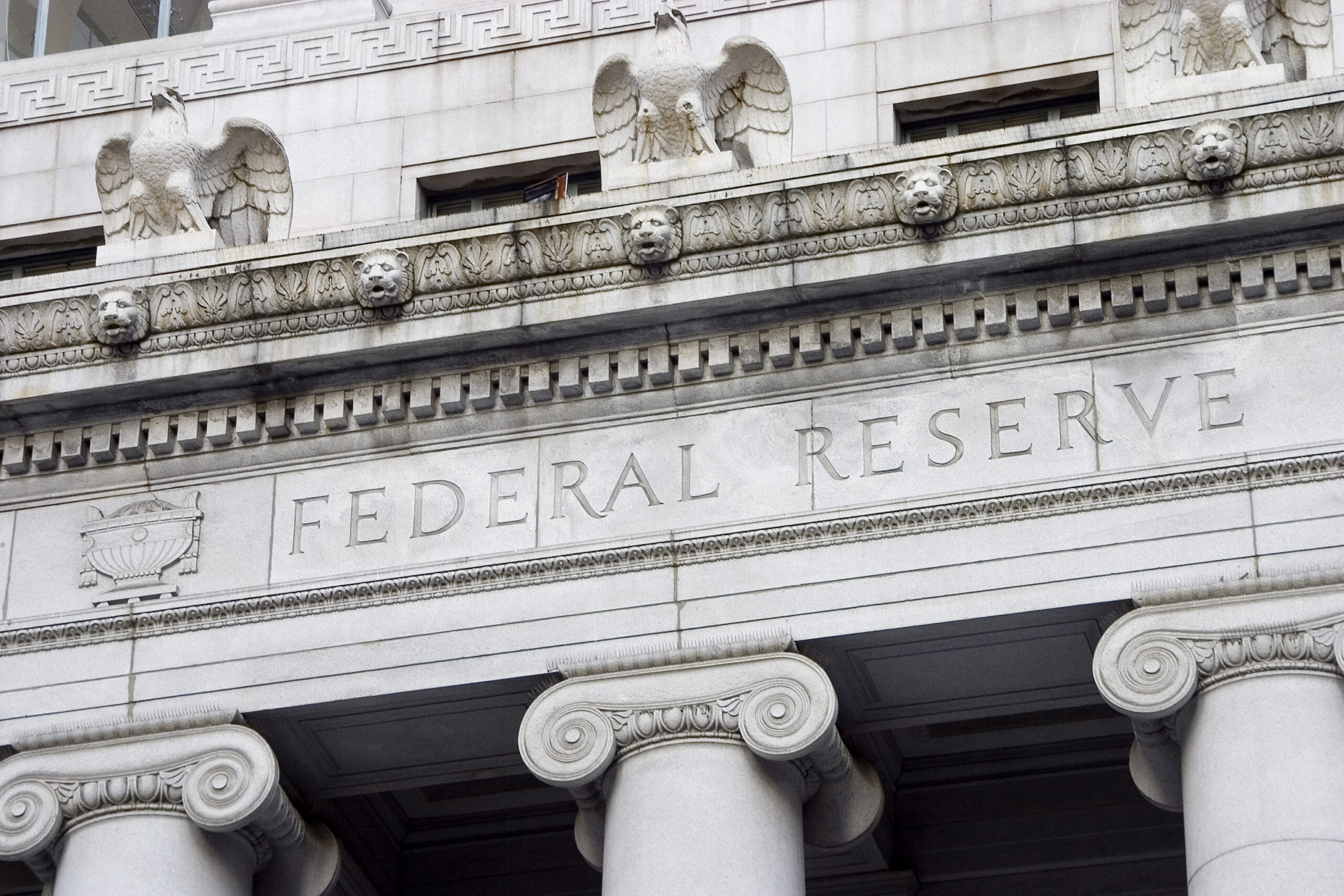
The same can be said of market structure, but let’s spotlight only economics today, since there’s a Federal Reserve press conference. That way we leave something for tomorrow.

Photo 18319971 | Economics © Brad Calkins | Dreamstime.com
The United Auto Workers strike at the big automobile manufacturers is a direct byproduct of a lack of understanding of economics.
How? During the pandemic, governments prevented citizens from working. Here in the USA, we also paid people to stay home, depositing monies directly into people’s checking accounts that was generated not from productive output but from the Federal Reserve.
One cannot but be thus bemused by how we will all hang on whatever words the Fed chair utters today.
As panic faded, and stock and bond markets bounced, and people’s checking accounts lay laden with artificial cash, they bought stuff. Video games. Meme stocks. Automobiles.
Since people had not been working to make things, a great demand/supply divergence materialized. Car makers could charge a lot for cars. They made record profits.
It’s illusory.
There was no increase in wealth in the United States during the pandemic. There was only an increase in the supply of money, coupled with a decrease in the supply of goods.
The UAW is now demanding unprecedented increases in compensation, believing it’s been gouged by greedy, rotten management teams.
I give you Herb Stein’s law. Stein was an economist. He probably used decimal points as he was Ben Stein’s dad.
He said, “If something cannot last forever, it will stop.”
What happens when all the money that rained down on the fruited plain is used up?
Consumption stalls.
According to data from the US Bureau of Economic Analysis, new-car sales dropped below 800,000 units in August, the lowest since April 2020, in the heart of the pandemic. In fact, it’s below the 2009 monthly average, during the heart of the financial crisis.
The monthly average since 2005 is about 1.3 million units. From 2020-2022, sales averaged about 1.2 million per month but auto prices shot up as too much money chased too few goods.
Yes, that’s inflation. But it’s not caused by an overheated economy. It’s caused by money for nothing.
So just about the time the UAW wants a massive increase in compensation, unit sales are cratering to crisis levels.
Couldn’t it just be that people want something for nothing? The UAW wants a 32-hour work week and all-in compensation that at the end of the contract would average about $300,000 annually including benefits.
Can you imagine what cars will cost if the people making them earn four times the average US household income?
It would be the height of irony if nobody could afford cars anymore and all three big manufacturers went broke and laid everyone off. Or worse, once UAW workers are making $300,000, the government must bail out the car companies. With taxpayer money.
I get that CEO pay is too high. Well, if you’re at a public company, you know how CEO pay is set. By consultants paid to make sure it keeps pace with “industry standards.”
I remember Les Schwab, founder of the eponymous tire shop that he started in Oregon, made less than the average Schwab store manager by the time I was in high school. But he wasn’t paying consultants to keep his pay in line with other tire CEOs.
Rich Kramer, CEO of Goodyear Tire, made $10.3 million last year. Probably a bit more than a Schwab tire shop manager.
But that’s not economics. It’s policy. And envy does a poor job finding common ground.
Suppose instead the government had never interrupted the supply chain, never stuffed accounts with fake cash. Would the UAW be striking, demanding a 40% increase in pay?
Counterfactuals are even more subjective than economic data, but it’s improbable. Companies and consumers alike would have had to adapt. There would be no sea of money distorting reality.
Is it better that government intervenes by printing money that so radically alters reality that people think they can be paid $300,000 to make cars?
The stock market also depends on things that aren’t real. Half the daily volume is short. Fake. Manufactured to fill trades where there are insufficient real buyers or sellers.
Is that superior to a market constrained by reality? It doesn’t matter because that decision has already been made for us, by a small group in government.
Back to central banks and economists, if the people in charge of policy are so fearful of collapse that they manufacture money and demolish the global supply chain, maybe we should lose confidence in them, and un-choose them?
But we don’t change either one. I find it a striking feature of modern culture that we apparently prefer economic and market façades to reality. Or is it that we don’t know enough to know?
I think a lesson in economics would help. Which is as funny as a decimal point.