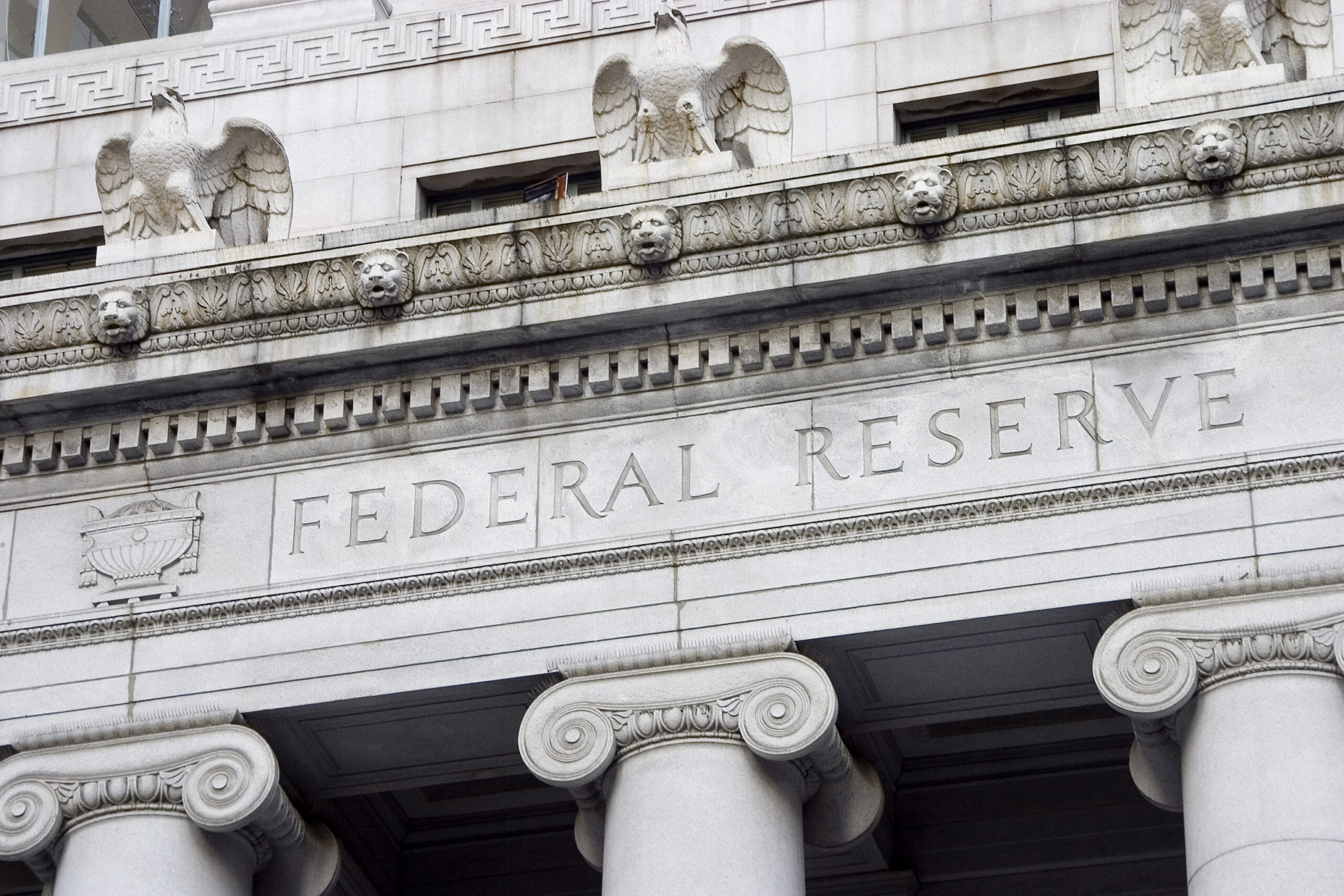
Public companies and investors, is the Federal Reserve using cash to hurt you?
What? Quast, don’t you mean they’re inflating stocks?
To a point, yes. And then history kicks in. There’s no such thing as “multiple expansion,” the explanation offered for why stocks with no increase in earnings cost more. If you’re paying more for the same thing, it’s inflation.
But that’s not what matters here. The Fed’s balance sheet is now over $7.7 trillion. “Excess reserves” held by member banks are $3.7 trillion, up $89 billion in just a week. In March 2007 excess reserves were about $5 billion. I kid you n ot.
ot.
What’s this got to do with stocks?
The banks behind about 85% of customer orders for stocks, about 95% of derivatives notional value, and the bulk of the Exchange Traded Fund (ETF) shares trading in the market are the same. And they’re Fed members.
Cash is fungible – meaning it can be used in place of other things. Same with ETF shares. About $500 billion of ETF shares are created or redeemed every month. ETF shares are swapped for stocks of equal value when money flows out of ETFs, and when it flows in, stocks of equal value are provided by brokers to sponsors like Blackrock so the brokers can sell ETF shares to the public.
Follow? Except it can be cash instead. Cash in lieu.
I mean, what is more abundant than cash now? There is so much excess money in the system thanks to the Fed’s issuance of currency that banks can find little better to do with it than leave it at the Fed for seven basis points of interest.
Or use it in place of stocks.
Buying and selling them is hard. They’re not liquid like $3.7 trillion of cash. There are transaction costs. Suppose a bank needs to bring $10 billion of S&P 500 stocks as a prime broker to Blackrock to get it back in line with asset-allocations? That’s a lot of work.
But what if Blackrock would be happy with $10 billion of cash, plus a few basis points of over-collateralization? That’s cash in lieu.
I’m not suggesting it happens all the time. But as the President would say, Come on man. Imagine the temptation when creating and redeeming ETF shares for both parties to prefer cash. It’s piled in drifts.
And you don’t have to settle any shares. You don’t have to pay trading commissions. And it’s an in-kind exchange of things of equal value. Cash for ETFs, or stocks for ETFs, either way. Tax-free.
Oh, and you won’t see any ownership-change, public companies.
Don’t you wonder why stock-pickers – who enjoy none of these advantages – accept this disparity? Rules are supposed to level the playing field, not tilt it like a pinball machine.
Anyway, here’s the problem for public companies and investors. These transactions aren’t recorded in cash. They’re in lieu, meaning the cash represents a basket of stocks. On the books, it’s as though Blackrock got stocks.
So, we investors and public companies think Blackrock owns a bunch of stocks – or needs to buy them. But it’s instead swapping cash in lieu.
The real market for stocks is not at all what it seems. Stocks start doing wonky things like diverging wildly.
Investors, I think you should complain about cash in lieu. It distorts our understanding of supply and demand for stocks.
And public companies, you wonder why you’re not trading with your peers? If you’re “in lieu,” you’re out. There are more reasons, sure. But nearly all times it’s not your story. It’s this.
And it’s not fraudulent. It’s within the rules. But excess reserves of $5 billion would make substituting cash for stocks all but impossible. The more money there is, the more it will be substituted for other things of value.
It’s Gresham’s Law – bad money chases out good. Copernicus came up with that. Apparently he was known as Gresham (just kidding –Englishman Thomas Gresham, financial advisor to Queen Elizabeth I, lent his name to the rule later). But it says people will hoard the good stuff – stocks – and spend the bad stuff.
Cash.
And so it is.
The Fed is distorting markets in ways it never considered when it dipped all assets in vast vats of dollars and left them there to soak.
The good news is we can see it. We meter the ebb and flow of equities with Market Structure Sentiment and Short Volume (for both companies and investors). Broad Market Sentiment peaked right into expirations – telling us demand was about to fall.
It’s one more reason why market structure matters.